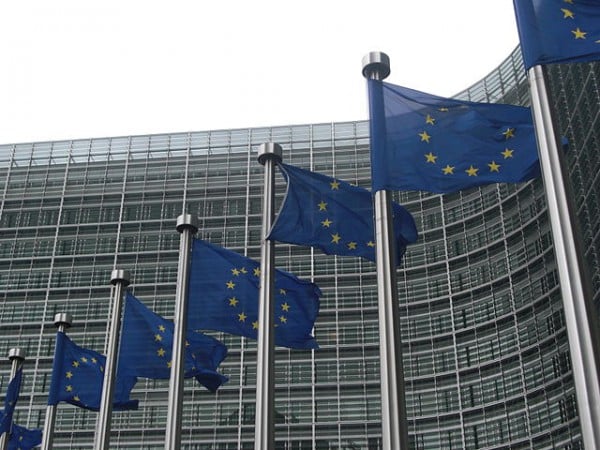
On the ocassion of the last European Council of 2013, the EU Heads of State and Government discussed on a wide range of topics and also held a strategic debate on Common Security and Defence Policy.
If we were to consider the European Union as a country, it would occupy the 1stposition in terms of global presence (1st PIB, and population of 502,467,790 in 2012), slightly before the United States.
This position would be held since 2010 and largely due to an intense growth of its economic presence that started in 2005. This is the result of dynamic services and investments. Manufactures and primary goods exports are also boosted, raising the contribution of the economic dimension to the European Union’s global presence from 32% in 2005 to 44.5% in 2012.

However, the European Union’s presence in the world is mostly soft. This accounts for 52% of total presence and makes the Union rank 1stin all the years for which its Global Presence Index is estimated. It is worth highlighting its role in sports, sevelopment cooperation, technology, science and tourism, and, to a lesser extent, migration, culture and education.
The European Military presence has decreased both in absolute and relative terms, from 6% to 3.5% of total presence between 2005 and 2012.
The current crisis has provoked a slowdown in the growth of several variables, in different years. In 2011, the growth of economic presence slows, but in the case of soft variables, this dates back to 2010. Development cooperation sharply descends in 2012; a path that likely will continue and will have strong effects on Europe’s global presence.
More data and info on the Elcano Global Presence Index website.
¿Ha sido útil esta publicación?